


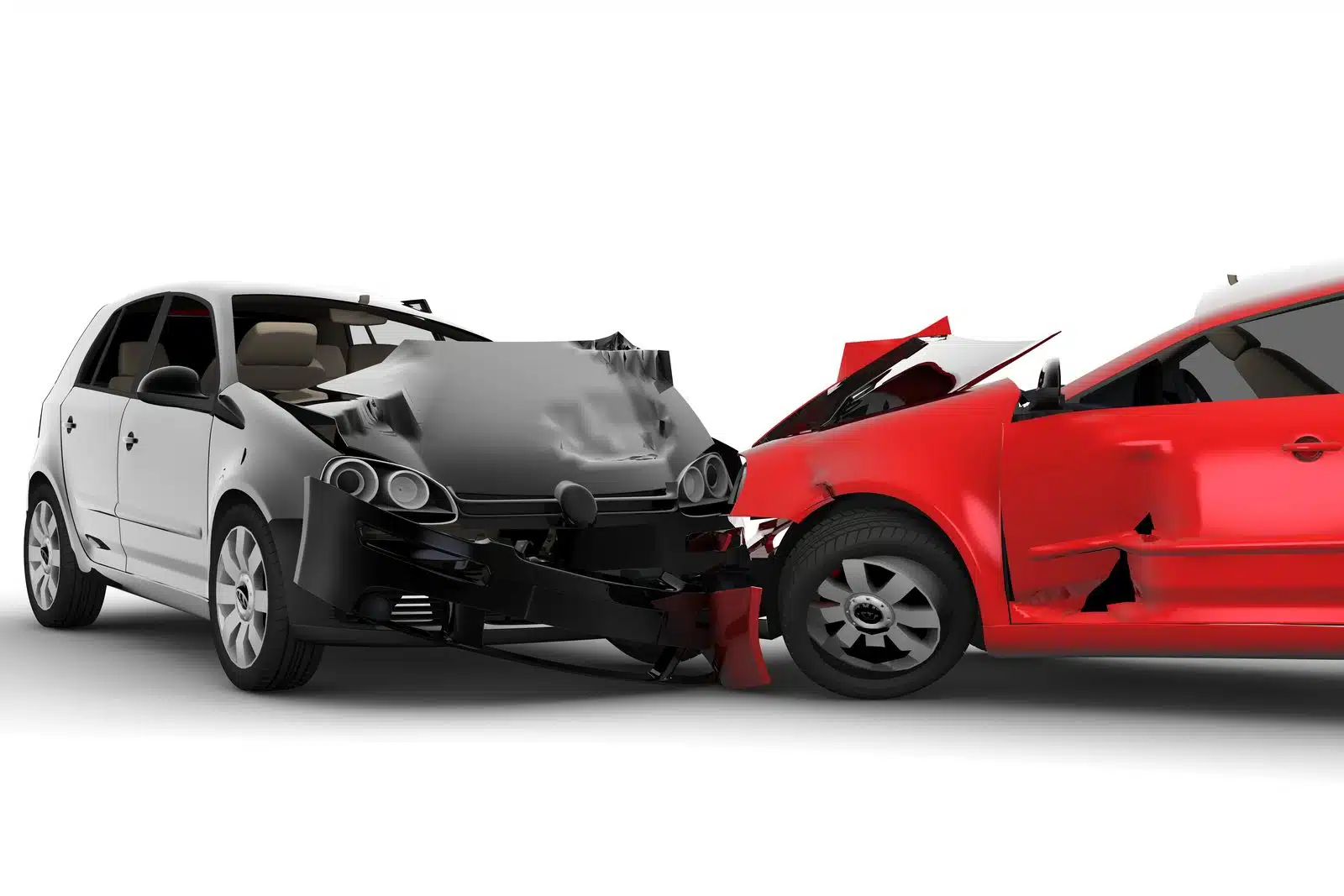
Respuesta rápida: Una colisión frontal ocurre cuando los frentes de dos vehículos se golpean uno al otro — y porque las velocidades de ambos coches se combinan, es el tipo más violento y mortal de choque en la carretera. Estos casos casi siempre aparecen que cruzó la línea central, por lo que el conductor que causó el accidente (o su asegurador) a menudo disputará falta. Nos movemos rápido para bloquear la evidencia — datos de caja negra, marcas de esquiar y gouge, imágenes de dashcam y reconstrucción de accidentes — y buscar todas las fuentes de indemnización, incluso Daños punitivos cuando un conductor equivocado o borracho es culpable. Los plazos corren de uno a tres años dependiendo del estado. Call 800-224-5546 para una consulta libre — sin honorarios a menos que ganes.
Head-On Collision Claims at a Glance
| Pregunta | Respuesta corta |
|---|---|
| ¿Por qué se estrella peor que otros restos? | Las velocidades de ambos vehículos se unen, por lo que la fuerza de impacto es mucho mayor. |
| ¿Cuál es la causa más común? | Un conductor cruzando la línea central — del deterioro, la fatiga, la distracción o el paso inseguro. |
| ¿Y si yo fuera en parte culpable? | Generalmente se puede recuperar; la mayoría de los estados que servimos reducen, no eliminan, su premio. |
| ¿Puedo recibir daños punitivos? | A menudo sí — cuando el conductor a la culpa estaba borracho, alterado o manejando el camino equivocado. |
| ¿Cuánto tiempo tengo que archivar? | 1-3 años dependiendo del estado. Tennessee puede ser tan corto como un año. |
| ¿Qué costará un abogado? | Nada delante — cuota de contingencia pagada sólo si te recuperas. |
¿Por qué los colecciones Head-On Son los Crashes más Deadliest en la carretera
En un choque de retaguardia o de retaguardia, los vehículos suelen moverse en la misma dirección, por lo que la diferencia en sus velocidades determina la fuerza del impacto. Una colisión frontal es diferente — y mucho peor. Cuando dos vehículos golpean frente a frente, sus velocidades combinan. Dos coches que viajan 55 mph hacia el otro producen una velocidad de cierre de aproximadamente 110 mph, y la energía que un choque desencadena aumenta con el cuadrado de esa velocidad. El resultado es catastrófico: el compartimento de pasajeros está aplastado, los ocupantes se lanzan hacia adelante en una pared de aceleración de acero, y el espacio sobrevivible desaparece en una fracción de segundo.

Por eso los impactos frontales dominan las estadísticas de fatalidad. Según el Instituto de Seguros de Seguridad en las Autopistas, los impactos frontales representaron el 60% de las muertes de ocupantes de vehículos de pasajeros en 2023 — la mayor parte de cualquier dirección de impacto. Los accidentes de cabeza también se concentran en las carreteras rurales de dos carriles, donde no hay mediana para separar el tráfico opuesto; las carreteras rurales llevan aproximadamente el 19 por ciento de la población estadounidense, pero representan alrededor de 40 por ciento de todas las muertes por accidente, la mayoría en carreteras publicadas a 55 mph o superior.
Estadísticas de mal funcionamiento y Head-On Crash
Fuentes: AAA Foundation for Traffic Safety (2026), basado en NHTSA FARS; IIHS Fatality Facts 2023.
Una de las formas más mortíferas de la colisión es la accidente de carretera equivocado — un conductor que se dirige contra el tráfico en una carretera dividida o una rampa de entrada. Un estudio de 2026 de la Fundación AAA para la Seguridad del Tráfico encontró que 4,164 accidentes callejeros fatales mataron a 5.730 personas en carreteras divididas entre 2014 y 2023, y el número anual de muertos casi duplicado en ese decenio, de 373 en 2014 a 699 en 2023. El hallazgo más llamativo del estudio: alrededor del 70 por ciento de los conductores de la vía incorrecta eran con alcohol, y un conductor con un BAC por encima de .12 tenía más de 80 veces las probabilidades de ser el conductor equivocado. Más del 80 por ciento de estos accidentes sucedieron en la oscuridad, y los conductores mayores de 70 años estaban fuertemente sobrerepresentados.

El peaje cae fuertemente en los estados que servimos. Durante el período 2014–2023, Texas registró 894 muertes por accidente de carretera equivocada — más que cualquier otro estado en el país — seguido de Georgia (253), Tennessee (143), Mississippi (139), Arkansas (77), y Kentucky (61).

¿Qué causa las colisiones Head-On
Casi cada choque de cabeza en cabeza comienza de la misma manera: un vehículo deja su carril adecuado y entra en tráfico entrante. Las razones que suceden son el corazón del caso de responsabilidad:
- Conduciendo mal. Alcohol y drogas lento tiempo de reacción y destruir el control del carril — el factor más grande en fallos de la vía equivocada y de la línea central. Si un conductor borracho te golpeó, vea nuestra abogado por accidente de conducir página; estos casos a menudo soportan daños punitivos.
- Conduciendo mal. Entrando en una carretera por una rampa de salida o conduciendo contra un flujo de un solo sentido, frecuentemente por la noche y con frecuencia deteriorado. Si un conductor equivocado te golpeó, vea nuestra abogado del accidente página.
- Drowsy conducir. Un conductor fatigado que va por la línea central — común en largos tramos rurales y entre conductores comerciales nocturnos.
- Distracción. Texto, uso del teléfono, o mirando lejos lo suficiente para que el coche vague en el tráfico entrante.
- Paso inseguro. Saliendo para pasar por un camino de dos vías sin suficiente distancia clara — un escenario rural clásico.
- Velocidad y pérdida de control. Tomar una curva demasiado rápida, hidroplanear o sobrecorregir en la línea central.
Probando quién cruzó la línea
Los casos de colisión frontal casi siempre bajan a una sola pregunta: ¿qué conductor cruzó la línea central? Debido a que el conductor a la culpa y su asegurador a menudo disputan que, el caso es ganado o perdido en evidencia física — y esa evidencia desaparece rápidamente. Los registros de datos del evento de los vehículos ("cajas negras"), las marcas de esquiado y gouge en el pavimento, patrones de campo de escombros, dashcam y videocámara de tráfico, y un análisis de reconstrucción de accidentes pueden establecer punto de impacto y posición de carril con precisión.
Es por ello que la acción temprana importa tanto en los casos en que se trata. Marcas de piel se desvanecen, los vehículos se reparan o se despedazan (tomar sus datos de caja negra con ellos), y las imágenes de vigilancia se sobrescriben en días. Enviamos Cartas de reserva inmediatamente, trabajar para asegurar los vehículos antes de que sean liberados, obtener el informe policial de choque y cualquier registro de emergencia y envío, y traer en reconstrucción y expertos biomecánicos cuando se impugna la causalidad de fallos o lesiones. Construir ese disco temprano es lo que derrota a una defensa "su cliente cruzó la línea".
Leyes por defecto en los Estados que servimos
Debido a que los casos encabezados tan a menudo implican una disputa de falla, el estado negligencia comparativa la regla puede decidir cuánto se recupera — o si te recuperas en absoluto. Las reglas difieren significativamente Tennessee, Mississippi, Arkansas, Texas, Kentucky, y Georgia:
| Estado | Artículo | Lo que significa para ti |
|---|---|---|
| Tennessee | Modificado — 50% de la barraMcIntyre v. BalentineS.W.2d 52 (Tenn. 1992) | Usted puede recuperar sólo si usted es menos del 50% de culpa; su premio se reduce por su parte. |
| Mississippi | Comparación pura (Miss. Code § 11-7-15) | You can recover even if you are mostly at fault; the award is simply reduced by your percentage. |
| Arkansas | Modified — 50% bar (Ark. Code § 16-64-122) | Barred only if your fault is equal to or greater than the other driver’s; otherwise reduced by your share. |
| Texas | Modified — 51% bar (Tex. Civ. Prac. & Rem. Code § 33.001) | You can recover unless your responsibility is greater than 50%; you may still recover at exactly 50%. |
| Kentucky | Pure comparative (KRS § 411.182) | You can recover even if you are largely at fault; the award is reduced by your percentage. |
| Georgia | Modified — 50% bar (O.C.G.A. § 51-12-33) | Usted puede recuperar sólo si usted es menos del 50% de culpa; su premio se reduce por su parte. |
These rules are applied to the facts of each case. Because insurers use shared-fault arguments to cut payouts, how fault is investigated and presented can change your recovery dramatically.
What Compensation Can You Recover?
A head-on collision claim seeks the full range of damages, documented and aggressively pursued: all medical expenses, past and future, including surgery, rehabilitation, and long-term care; lost wages and lost earning capacity, which can be enormous after a disabling injury; pain, suffering, and emotional distress; property damage; and in fatal crashes, wrongful death damages for the family. When the at-fault driver was drunk, drugged, or driving the wrong way, the law in several of our states allows Daños punitivos on top of those amounts to punish that reckless conduct — which is why building the impairment evidence early can substantially increase the value of the case. And because head-on crashes are so often caused by impaired or uninsured drivers, we also pursue your own cobertura motorista no asegurada o asegurada when the at-fault driver can’t cover your losses.
The Catastrophic Injuries Head-On Crashes Cause
The extreme forces in a frontal impact produce some of the most severe injuries we see: traumatismo cerebral from the head striking the interior or from rapid deceleration; spinal cord injuries and paralysis; multiple fractures of the legs, hips, and pelvis as the lower body is driven into the dashboard and footwell; internal organ damage and internal bleeding; chest and rib trauma from the steering wheel, seatbelt, or airbag; and, tragically, fatal injuries. These are life-altering harms with lifetime costs, and valuing them correctly requires medical and economic experts who can project the full cost of future care, lost income, and diminished quality of life — not the lowball figure an insurer offers in the first weeks.
Filing Deadlines by State
Every state sets a strict deadline — the prescripción — to file an injury lawsuit. Miss it and your claim is gone, no matter how strong:
| Estado | Injury filing deadline |
|---|---|
| Tennessee | 1 year (T.C.A. § 28-3-104) |
| Mississippi | 3 years (Miss. Code § 15-1-49) |
| Arkansas | 3 years (Ark. Code § 16-56-105) |
| Texas | 2 años (Tex. Civ. Prac. " Rem. Code § 16.003) |
| Kentucky | 2 years from the crash or last PIP payment (KRS § 304.39-230) |
| Georgia | 2 años (O.C.G.A. § 9-33) |
Deadlines can be shorter or longer in specific situations (government defendants, minors, wrongful death). Talk to a lawyer promptly about your exact deadline.
What to Do After a Head-On Collision
- Llame al 911 and report the crash so officers document the scene and lane positions while the evidence is fresh.
- Get medical care immediately, even if you feel okay — frontal-impact injuries like internal bleeding and brain trauma are often masked by adrenaline.
- Fotografía todo — both vehicles, their final resting positions, skid and gouge marks, debris, and the roadway and any signage.
- Get witness names and contacts, especially anyone who saw which car crossed the center line.
- Note conditions — weather, lighting, and whether the other driver appeared impaired or was going the wrong way.
- Request the crash report and, if there was an arrest, the criminal case number.
- Don’t give a recorded statement to the other driver’s insurer until you’ve spoken with a lawyer.
- Call a head-on collision lawyer quickly — black-box data, skid marks, and camera footage disappear fast, and in Tennessee your deadline can be as short as one year.
Our Results in Serious Auto Accident Cases
Every case is different, but our results reflect how hard we fight for crash victims:
- Six-figure recovery — Our client was stopped in traffic when an 18-wheeler failed to stop in time and rear-ended them.
- Six-figure settlement — An 18-wheeler pushed our client into a barrier wall, causing her injuries.
- $175,000 settlement — Our client’s Mercedes was rear-ended and caught fire; even with minimal medical treatment, we recovered $175,000.
Prior results do not guarantee a similar outcome. Every case depends on its own facts.
¿Por qué elegir Fiscales de Lesiones del Sur
We are a contingency-fee injury firm built for serious accidente de coche and head-on collision cases, with attorneys licensed in Tennessee, Mississippi, Arkansas, Texas, Kentucky y Georgia. Head-on cases are won on evidence and physics, so we move fast to preserve black-box data, skid and gouge marks, and camera footage, retain accident-reconstruction and medical experts, and build every case for trial — which is what produces fair settlements. No pagas nada a menos que ganemos. If your crash happened in Memphis, see our dedicated Memphis head-on collision lawyers página.
Sede: 5050 Poplar Ave, Ste 920, Memphis, TN 38157, with offices in Dallas, Houston, and Atlanta. Consultations are free and handled by phone anywhere we practice: 800-224-5546.
Head-On Collision FAQs
Why are head-on collisions so much more dangerous than other crashes?
Because the speeds of both vehicles combine. Two cars closing at 55 mph each create a roughly 110-mph impact, and crash energy rises with the square of speed. The passenger compartment takes the full force at once, which is why frontal impacts cause the largest share of passenger-vehicle occupant deaths.
How do you prove the other driver crossed the center line?
With physical evidence: event-data-recorder (“black box”) downloads, skid and gouge marks, the debris field, vehicle damage patterns, dashcam and traffic-camera footage, and accident reconstruction. We preserve that evidence quickly because it degrades or disappears within days.
What if the other driver says I crossed the line?
Fault disputes are common in head-on cases, which is exactly why reconstruction evidence matters. Point-of-impact analysis, gouge marks, and black-box speed and braking data can objectively show which vehicle left its lane, regardless of what the other driver claims.
¿Puedo recuperarme si estaba en parte culpable?
Usually yes. Mississippi and Kentucky use pure comparative negligence, so you can recover even if you were mostly at fault, with the award reduced by your share. Tennessee, Arkansas, Texas, and Georgia allow recovery as long as your fault stays below the state’s bar (50% in most, with Texas barring recovery only above 50%).
Can I get punitive damages after a head-on crash?
Often, when the at-fault driver was drunk, drug-impaired, or driving the wrong way. That kind of conscious, reckless conduct is what punitive damages exist to punish. Georgia removes its punitive cap entirely for intoxicated drivers, and Tennessee’s cap does not apply when the defendant was impaired.
What is the average settlement for a head-on collision?
There is no fixed average. Value depends on injury severity, future medical and care costs, lost earning capacity, available insurance, and whether punitive damages apply. Head-on crashes tend to cause catastrophic injuries, so the stakes — and the potential value — are usually high.
What if the wrong-way or drunk driver had no insurance?
You can still recover. We pursue your own uninsured/underinsured motorist coverage, which exists for exactly this situation, plus any other liable parties such as an employer, vehicle owner, or a bar that over-served an impaired driver.
How long do I have to file a head-on collision lawsuit?
It depends on the state: one year in Tennessee, two years in Texas, Kentucky, and Georgia, and three years in Mississippi and Arkansas. Some situations shorten the deadline, so talk to a lawyer promptly so nothing lapses.
The insurance company already offered me money. Should I take it?
Not before a lawyer values your case. Early offers in head-on cases rarely account for future surgeries, long-term care, lost earning capacity, or the punitive value when impairment is involved. Once you accept, you usually cannot reopen the claim.
What does a head-on collision lawyer cost?
Nothing up front. We work on contingency — our fee comes out of the recovery, and you owe nothing unless we win. Consultations are free.
Talk to a Head-On Collision Lawyer — Free
A head-on crash you didn’t cause can change your life in an instant. Getting full compensation shouldn’t be a fight you take on alone. Get a free, no-obligation consultation with attorneys licensed in Tennessee, Mississippi, Arkansas, Texas, Kentucky, and Georgia. Call 800-224-5546 — sin honorarios a menos que ganes. También puede contactarnos en línea.
Esta página es información legal general, no asesoramiento legal. Cada caso es diferente y los resultados nunca están garantizados. Contactarnos no crea una relación abogado-cliente.

