

Reviewed by Larry Peters, Attorney licensed in Tennessee, Mississippi, Arkansas, Texas, Kentucky, and Georgia · Última revisión: junio 2026.
4.8/5 · 96 Opiniones de Google
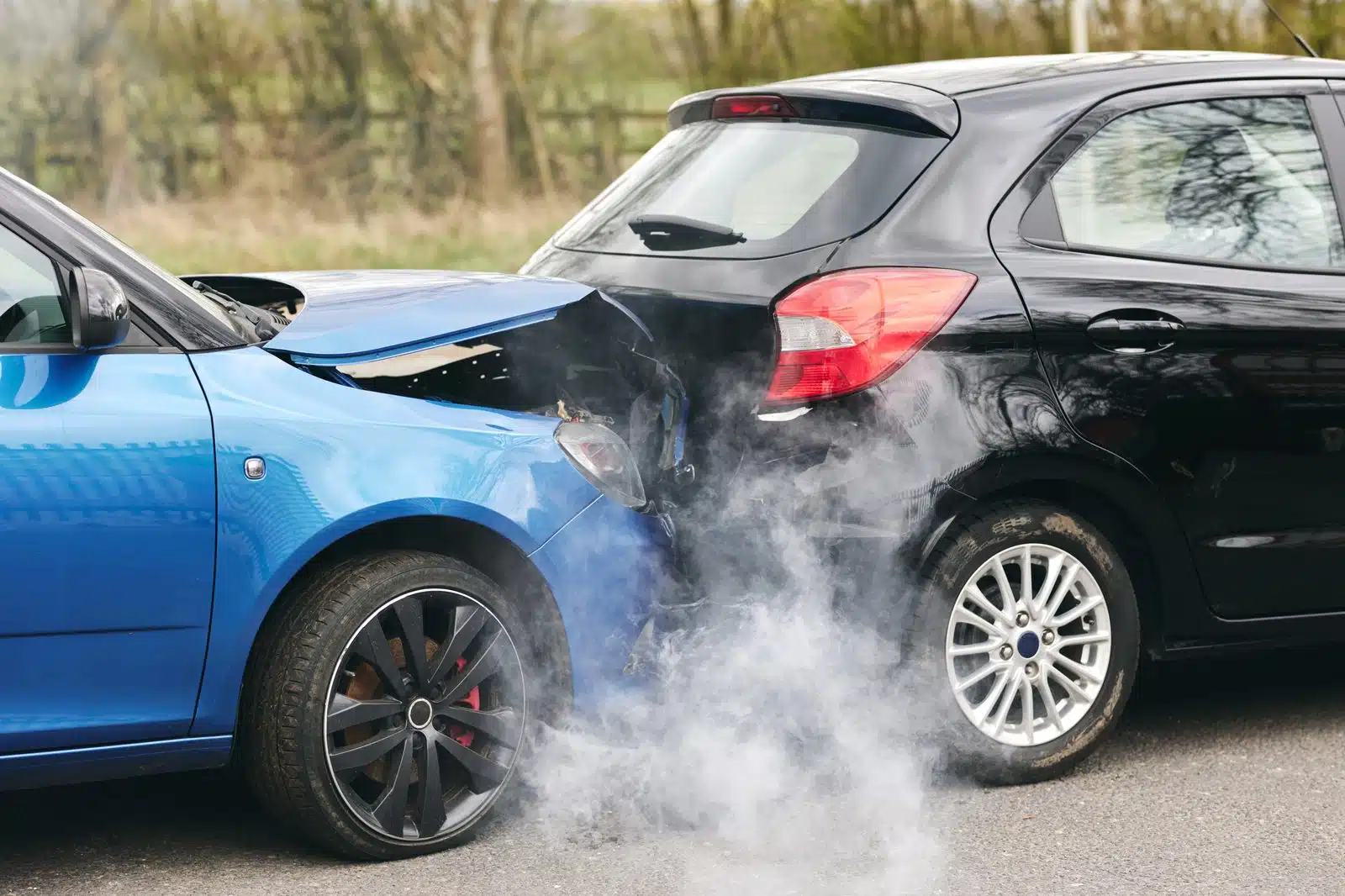
Rear-end collisions are among the most common crashes on Germantown roads — and among the most misunderstood. The stop-and-go flow on Poplar Avenue and Germantown Parkway, sudden braking at signals, and distracted following all set the stage for one car slamming into the back of another. These wrecks are often dismissed as “minor fender-benders,” but the forces involved routinely cause whiplash, herniated discs, and concussions that surface days later. Southern Injury Attorneys help injured Germantown drivers prove fault and recover full value for rear-end crashes, with no fee unless we win.
Sources: standard driver-safety stopping-distance data; Tenn. Code Ann. § 28-3-104; McIntyre v. Balentine.
Who is at fault in a rear-end collision?
In most rear-end crashes, the trailing driver is presumed at fault — not because of an automatic legal rule, but because drivers are expected to leave enough room to stop safely. Tennessee’s rules of the road require drivers not to follow more closely than is reasonable, taking into account speed, traffic, and road conditions. When someone rear-ends the car in front, the usual explanation is that they were following too closely, speeding, distracted, or not paying attention — all forms of negligence. The stopping-distance chart above shows why: at highway speeds, even a second of distraction eliminates any chance of stopping in time.
When the lead driver shares the blame
The presumption against the rear driver is strong but not absolute. The lead driver can share fault in situations such as: stopping suddenly without reason, reversing unexpectedly, driving with broken brake lights, cutting in too closely and then braking, or being illegally stopped in a travel lane. Because Tennessee uses comparative fault, even a partially-at-fault lead driver’s recovery is reduced rather than erased — and the rear driver’s insurer will look for any of these facts to shift blame. Establishing exactly what happened, through the police report, witness statements, and any dashcam or business video, is how we keep responsibility where it belongs.
Whiplash and the danger of delayed symptoms
The signature injury of a rear-end crash is Whiplash — the rapid back-and-forth snap of the head and neck that strains muscles, ligaments, and discs. Whiplash and related soft-tissue and spinal injuries frequently do not hurt much at the scene; the pain, stiffness, headaches, and numbness build over the following hours and days as inflammation sets in. Concussions and disc herniations follow the same pattern. This delay is dangerous for two reasons: it leads people to skip medical care, worsening their injury, and it hands the insurer an argument that you were not really hurt. Getting evaluated promptly — even after a “minor” impact — protects both your health and your claim.
Chain-reaction and multi-car pileups
On busier corridors and the Bill Morris Parkway, a single rear-end impact can trigger a chain reaction, pushing one car into the next. These multi-vehicle crashes create thorny fault questions: the driver who started the chain may bear most of the blame, but middle drivers can be drawn in too. Multiple insurers point fingers at one another, and untangling who hit whom — and in what order — often requires an independent investigation and reconstruction. Sorting out each driver’s share of fault is essential to making sure you are not unfairly blamed for damage you did not cause.
Tennessee’s 50% fault rule and one-year deadline
Tennessee applies falla comparativa modificada: your recovery is reduced by your percentage of fault and barred entirely at 50% or more. And you have just un año from the date of the crash to file suit under Tenn. Code Ann. § 28-3-104. Because rear-end injuries are routinely downplayed and the deadline is short, it is wise to document everything and speak with a lawyer early rather than assuming a “small” crash will resolve itself fairly.
What your Germantown rear-end claim is worth
Even crashes that leave little visible vehicle damage can produce real, lasting injuries — and Tennessee law lets you recover for all of them. That includes economic damages (medical bills, future treatment such as physical therapy or injections, and lost income) and non-economic damages (pain and suffering, and loss of enjoyment of life). The value of a claim depends on the severity and duration of the injury, how clearly the other driver was at fault, and the available insurance. Do not let an adjuster convince you that a low-speed crash automatically means a low-value claim; the medical reality, not the bumper, determines the harm.
| Common rear-end injury | Why it matters |
|---|---|
| Whiplash / neck strain | Can require months of therapy and linger for years |
| Discos herniados o abultados | May need injections or surgery; often shows up on later imaging |
| Concussion / TBI | Headaches, memory and concentration problems, sensitivity to light |
| Shoulder and back injuries | From bracing against the wheel or seatbelt forces |
What to do after a rear-end crash in Germantown
- Llame al 911 and get a police report, even if the crash seems minor.
- See a doctor promptly and describe all symptoms, including neck pain, headaches, and numbness.
- Photograph both vehicles — including bumpers and the road — and collect witness information.
- Do not accept blame or downplay your injuries at the scene.
- Avoid giving the other insurer a recorded statement before talking to a lawyer.
- Llame a los abogados de lesiones del sur for a free review.
En resumen: The trailing driver is usually at fault in a rear-end crash, but the lead driver can share blame — and Tennessee’s 50% bar makes that fight matter. Because whiplash and disc injuries show up late, get checked promptly and document everything. Call 800-224-5546.
Why insurers lowball rear-end claims — and how we push back
Insurance companies treat rear-end crashes as a category they can settle cheaply. Their playbook is predictable: point to minor bumper damage and argue the impact was “too small” to cause real injury; seize on any gap or delay in your medical treatment as proof you were fine; blame your symptoms on a pre-existing condition or normal aging; and push a fast, low offer before you understand how long your recovery will take. None of these arguments holds up when the medical record is built properly. We counter them by tying your symptoms to the crash with prompt, consistent treatment notes, by obtaining imaging and specialist opinions where the injury warrants it, and by documenting how the injury affects your work and daily life. The goal is to replace the adjuster’s “soft-tissue, low-value” label with a clear, evidence-backed picture of real harm that a jury would credit.
Distracted and aggressive driving behind Germantown rear-end crashes
Most rear-end wrecks come down to inattention or impatience. Conducción distraída — texting, glancing at a navigation screen, or reaching for something — is the leading cause along the signal-heavy stretches of Poplar and Germantown Parkway, where traffic stops and starts constantly. Tailgating and aggressive driving on the Bill Morris Parkway leave no margin when traffic slows. Adverse conditions make it worse: rain on US-72, sun glare at dawn and dusk, and the bunching of traffic near school zones and shopping centers all shorten the time a following driver has to react. When a driver chooses to follow too closely or look away from the road, the resulting crash is not bad luck — it is negligence, and the law holds that driver responsible for the harm they cause.
When a delivery or commercial vehicle hits you from behind
Germantown’s retail corridors draw a steady stream of delivery vans, box trucks, and rideshare drivers, and when one of them rear-ends you the case can be larger than an ordinary fender-bender. A driver working for a company may be covered by a commercial policy with much higher limits than a personal auto policy, and the employer can be directly responsible for a crash caused by an on-the-clock driver. Rideshare collisions involving Uber or Lyft can trigger sizable coverage when the app was active. Identifying the right defendant and the right policy — the driver, the employer, or a commercial insurer — is often the difference between a claim capped at state minimums and one with enough coverage to make you whole. We investigate the ownership and employment behind the vehicle that hit you so no available source of compensation is left on the table.
What our Germantown-area clients say
★★★★★ Verified Google reviews · 4.8/5 average across 96 reviews
“I was in an accident in Memphis and I had the best experience and outcome from Southern Injury Law! Jimmy Peters is awesome!”
“I was involved in a car accident in Memphis and honestly didn’t know where to go. Southern Injury Attorneys helped me through every step and fought hard for a fair settlement. Their team was always ready to answer questions. The results exceeded my expectations.”
“After a car accident in Memphis I was overwhelmed with insurance and medical bills. Southern Injury Attorneys helped me every step of the way — compassionate, responsive, and knowledgeable. Thanks to them I reached a fair resolution and could move forward.”
"¡Este equipo es increíble! Desde la primera consulta me sentí seguro de que estaba en las manos correctas. Mi abogado tomó el tiempo para entender cómo el accidente impactó mi vida y siempre fue una llamada telefónica. Cuando llegó el momento de negociar, eran duros y tenían resultados".
Preguntas frecuentes
Is the rear driver always at fault in a rear-end crash?
Usually, but not always. Drivers are expected to leave enough room to stop, so the trailing driver is typically presumed at fault. The lead driver can share blame for sudden unjustified stops, reversing, broken brake lights, or cutting in too closely.
My car barely has damage. Can I still have a claim?
Yes. Low-speed rear-end impacts routinely cause whiplash, disc injuries, and concussions even when vehicle damage is minor. The medical reality, not the bumper damage, determines the harm. Have a doctor evaluate you and a lawyer review your claim.
Why do my neck and back hurt more days after the crash?
Whiplash and soft-tissue injuries often worsen over hours and days as inflammation develops. This is normal and is exactly why you should seek medical care promptly even if you felt okay at the scene.
What if the crash pushed me into the car ahead of me?
In chain-reaction crashes, fault usually falls on the driver who started the chain, but middle drivers can be drawn in. An independent investigation helps sort out who is responsible so you are not blamed unfairly.
¿Y si yo fuera en parte culpable?
You can still recover as long as you are less than 50% at fault. Your award is reduced by your percentage of fault under Tennessee’s modified comparative fault rule.
How long do I have to file a rear-end accident claim in Tennessee?
Generally one year from the date of the crash under Tenn. Code Ann. 28-3-104. Because injuries are often downplayed, document everything and speak with a lawyer early.
How much is my rear-end accident case worth?
It depends on the severity and duration of your injuries, how clear the other driver’s fault is, and the available insurance. We give an honest assessment after reviewing your records.
¿Qué cuesta contratar a tu empresa?
Nothing up front. We work on a contingency fee and are paid only if we win. The consultation is free.

Sobre el autor: Larry "Jimmy" Peters
Fundador " Lesiones Personales Abogado, Abogado de Lesiones del Sur
Licenciado en Tennessee (BPR #37889), Mississippi, Arkansas (#2020103), Texas (#24113438), Kentucky y Georgia (#936535).
Jimmy Peters founded Southern Injury Attorneys with one mission: maximizing compensation for people injured in car, truck, and premises-liability accidents across the Mid-South. He and his team handle auto and 18-wheeler crashes, slip-and-fall and other injury claims on a contingency fee — no fee unless the firm wins — and he personally reviews the firm’s legal content for accuracy. ★ 4.8/5 from 96 verified Google reviews. If you were hurt in Germantown or anywhere in Shelby County, the consultation is free.
This page provides general legal information about Tennessee personal injury law and is not legal advice. Reading it or contacting us does not create an attorney-client relationship.

