

Reviewed by Larry Peters, Attorney licensed in Tennessee, Mississippi, Arkansas, Texas, Kentucky, and Georgia · Última revisión: junio 2026.
4.8/5 · 96 Opiniones de Google
A slip, trip, or fall can sound minor until it leaves you with a fractured hip, a torn rotator cuff, or a head injury. Property owners in Germantown — from the shopping centers along Poplar and Germantown Parkway to grocery stores, restaurants, apartment complexes, and office buildings — have a legal duty to keep their premises reasonably safe. When they ignore a spill, a broken stair, poor lighting, or an icy walkway and someone gets hurt, Tennessee premises-liability law gives the injured person a right to compensation. Southern Injury Attorneys help injured Germantown residents prove these claims and recover full value, with no fee unless we win.
Sources: CDC older-adult falls data, 2024; Tenn. Code Ann. § 28-3-104.
A property owner’s duty of care in Tennessee
Under Tennessee premises-liability law, a property owner or occupier must use reasonable care to keep the property safe and to warn visitors of hidden dangers the owner knows about or should discover. This duty applies to stores, restaurants, hotels, apartment complexes, parking lots, and private property alike. It does not make the owner an automatic insurer of everyone’s safety — the law asks whether the owner acted reasonably under the circumstances. Winning a slip-and-fall case means proving the owner failed that standard and that the failure caused your injury.
Your status on the property matters
Tennessee, like most states, has historically measured the duty owed by the visitor’s status:
- Invitados — customers and others on the property for the owner’s business benefit — are owed the highest duty: reasonable care to keep the premises safe and to inspect for and fix or warn of dangers.
- Licencias — social guests and others present with permission but not for business — are owed a duty to be warned of known hidden dangers.
- Trespassers — those on the property without permission — are generally owed only a duty not to be willfully or wantonly harmed, with special protections for children under the attractive-nuisance doctrine.
Most slip-and-fall claims in Germantown involve invitees — shoppers, diners, and tenants — which is the strongest position for an injured person. Tennessee courts increasingly focus less on rigid labels and more on the foreseeability of harm, but visitor status still frames the analysis.
The notice requirement: the heart of most cases
The single most important issue in a Tennessee slip-and-fall case is usually Aviso. To hold the owner liable for a dangerous condition like a spill, you generally must show the owner either created the hazard, had notificación real of it (someone told them, or they knew), or had notificación constructiva — the condition existed long enough that a reasonable owner should have discovered and fixed it.
Constructive notice is where cases are won and lost. A puddle that appeared thirty seconds before you fell may not create liability; a puddle that sat for an hour while employees walked past it does. Proving how long a hazard existed often depends on surveillance video, inspection logs, employee testimony, and incident reports — evidence that can disappear quickly. That is why getting a lawyer involved early, before the store records over its cameras, can make or break a claim.
The open-and-obvious defense
Property owners frequently argue that the hazard was open and obvious — so visible that you should have seen and avoided it. In Tennessee this is not an automatic defense. Even when a danger is obvious, the owner can still be liable if it was reasonably foreseeable that a visitor would encounter it and be hurt anyway, with the question handled through comparative fault. In other words, an obvious hazard may reduce your recovery if you share some blame, but it does not necessarily eliminate the owner’s responsibility.
Common fall hazards on Germantown property
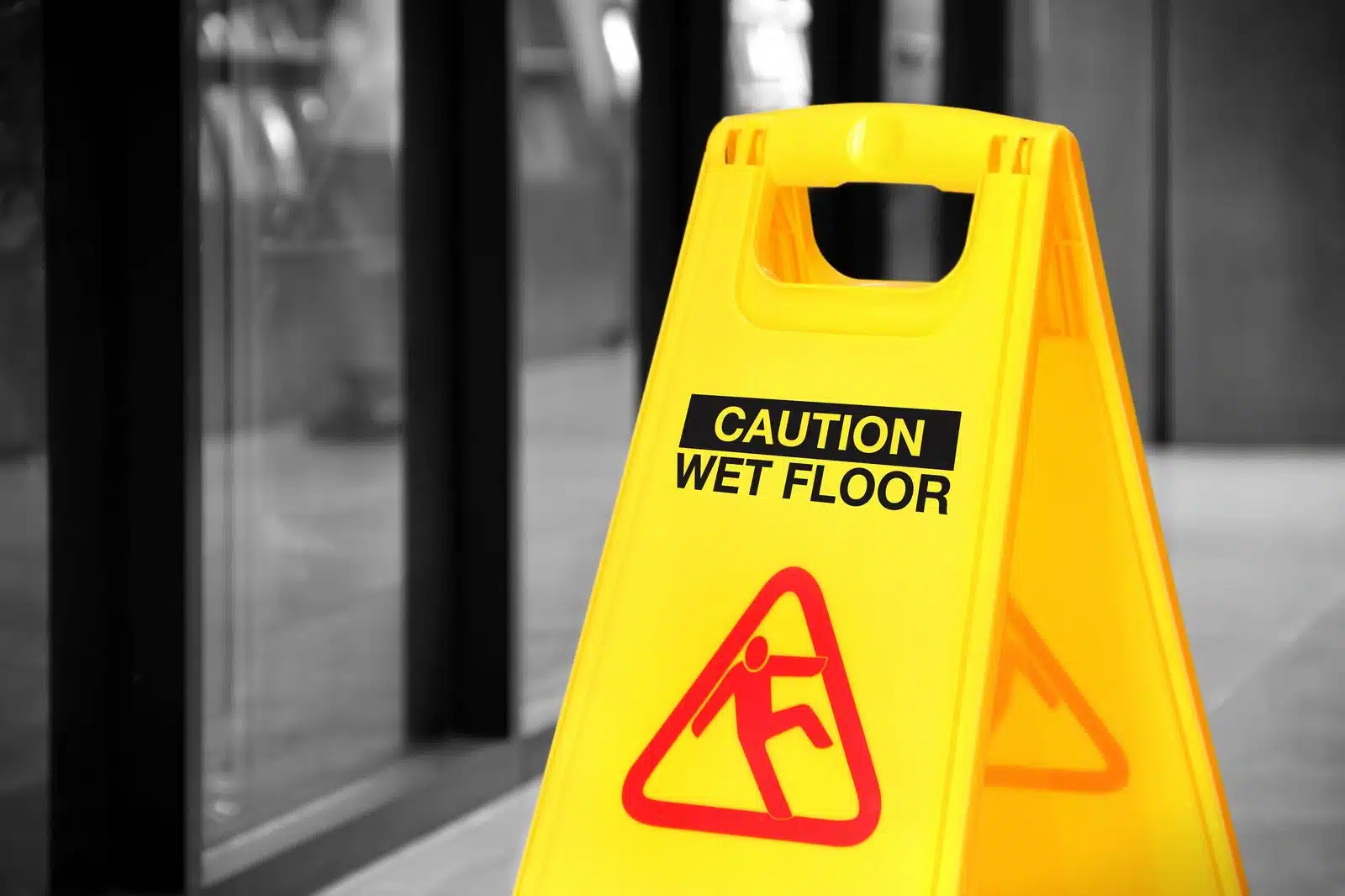
The cases we see most often arise from preventable conditions: wet or freshly mopped floors without warning signs; spills in grocery and big-box stores; uneven pavement, potholes, and curb defects in parking lots; broken or poorly lit stairways; loose handrails; torn carpeting and floor mats; and ice or water tracked into entryways. In apartment complexes, poorly maintained common areas, dim stairwells, and neglected sidewalks are frequent culprits. Each of these is something a reasonably careful owner should catch and correct.
Comparative fault and the one-year deadline
Tennessee falla comparativa modificada rule applies to falls just as it does to car crashes. Your recovery is reduced by your share of fault, and if you are 50% or more at fault you recover nothing. Owners and their insurers lean on this hard — arguing you were distracted, wearing the wrong shoes, or ignoring a warning. Building a clear record of the hazard and the owner’s failure to address it is the best counter.
You also have just un año from the date of the fall to file suit under Tenn. Code Ann. § 28-3-104. Combined with how fast video and incident records vanish, the short deadline makes early action essential.
What your Germantown slip-and-fall claim is worth
Fall injuries are often more serious than people expect — hip and wrist fractures, shoulder tears, herniated discs, and traumatic brain injuries are common, especially for older adults. Tennessee lets you recover economic damages (medical bills, future care, lost income), non-economic damages (pain and suffering, loss of enjoyment of life), and, in cases of especially reckless conduct, punitive damages. The value of a claim turns on the severity and permanence of the injury, the strength of the notice evidence, and the available insurance. Premises policies for commercial properties are typically substantial, which can make full compensation achievable when liability is proven.
| What we prove | How we prove it |
|---|---|
| A dangerous condition existed | Photos, the incident report, witness accounts |
| The owner knew or should have known | Surveillance video, inspection and cleaning logs, employee testimony |
| The condition caused your injury | Medical records tied to the date and mechanism of the fall |
| The extent of your damages | Bills, future-care estimates, wage records, expert support |
What to do after a slip-and-fall in Germantown
- Report the fall to the store or property manager and ask that an incident report be created — get a copy if you can.
- Fotografía el peligro inmediatamente, before it is cleaned up, along with the surrounding area and your injuries.
- Obtener nombres e información de contacto for witnesses and any employees involved.
- Seek medical care right away and tell the provider exactly how the fall happened.
- Keep the shoes and clothing you were wearing, and do not give a recorded statement to the property’s insurer before talking to a lawyer.
- Llame a los abogados de lesiones del sur so we can demand the surveillance video before it is erased.
En resumen: A Germantown slip-and-fall case usually comes down to notice — proving the owner knew or should have known about the hazard — and that proof often lives on surveillance video that is erased within days. Act quickly and within Tennessee’s one-year deadline. Call 800-224-5546.
Stairways, ice, and apartment-complex falls
Some fall cases carry their own wrinkles. Stairway falls often involve building-code questions — riser heights, missing or loose handrails, and inadequate lighting — and a code violation can be strong evidence of negligence. Ice and snow cases turn on whether the owner had a reasonable opportunity to treat or warn of a known accumulation, which matters on the rare Mid-South winter days that ice over entryways and parking lots. Apartment-complex falls can implicate a landlord’s duty to maintain common areas such as stairwells, walkways, and lighting, and the lease and maintenance records become central evidence. In some cases a fall is part of a larger negligent-security problem — broken gates, burned-out lighting, or propped exterior doors — where the property’s failure to maintain safe conditions exposed a tenant or guest to harm. Each of these situations rewards an early investigation, because the physical conditions get repaired and the records get overwritten once a claim is on the horizon.
What our Germantown-area clients say
★★★★★ Verified Google reviews · 4.8/5 average across 96 reviews
“Absolutely the best in the city. Very professional — they helped me with my slip and fall with the apartment complex! Would recommend to anyone with a car accident or slip and fall in Memphis.”
"Mi abogado siempre estaba disponible para responder a cualquier pregunta y fue por encima y más allá para asegurarse de que obtuvimos lo que merecíamos! Todo el mundo era tan agradable y me hizo sentir que yo era importante!"
“My experience with them has been amazing. They really care about their clients.”
"¡Este equipo es increíble! Desde la primera consulta me sentí seguro de que estaba en las manos correctas. Mi abogado tomó el tiempo para entender cómo el accidente impactó mi vida y siempre fue una llamada telefónica. Cuando llegó el momento de negociar, eran duros y tenían resultados".
Preguntas frecuentes
Do I have a slip-and-fall case if I got hurt in a Germantown store?
Possibly. You generally must show the store created the hazard, knew about it, or should have discovered and fixed it (constructive notice), and that it caused your injury. A free consultation can tell you whether the facts support a claim.
What is the notice requirement?
To hold a property owner liable for a hazard like a spill, you usually must prove they created it, had actual knowledge of it, or that it existed long enough that a reasonable owner should have found and corrected it. Surveillance video and cleaning logs are key to proving this.
The store says the hazard was obvious. Does that end my case?
Not necessarily. In Tennessee, an open-and-obvious hazard does not automatically bar recovery. The owner can still be liable if it was foreseeable a visitor would encounter it and be hurt, with any shared blame handled through comparative fault.
What if I was partly to blame for my fall?
You can still recover as long as you are less than 50% at fault. Your award is reduced by your percentage of fault under Tennessee’s modified comparative fault rule.
How long do I have to file a slip-and-fall claim in Tennessee?
Generally one year from the date of the fall under Tenn. Code Ann. 28-3-104. Because video and incident records disappear quickly, you should act well before the deadline.
How much is my slip-and-fall case worth?
It depends on the severity and permanence of your injury, the strength of the notice evidence, and the available premises insurance. We give you an honest assessment after reviewing your records.
What should I do right after falling?
Report the fall and ask for an incident report, photograph the hazard before it is cleaned up, get witness information, seek medical care, and avoid giving the property’s insurer a recorded statement until you speak with a lawyer.
¿Qué cuesta contratar a tu empresa?
Nothing up front. We work on a contingency fee and are paid only if we win. The consultation is free.

Sobre el autor: Larry "Jimmy" Peters
Fundador " Lesiones Personales Abogado, Abogado de Lesiones del Sur
Licenciado en Tennessee (BPR #37889), Mississippi, Arkansas (#2020103), Texas (#24113438), Kentucky y Georgia (#936535).
Jimmy Peters founded Southern Injury Attorneys with one mission: maximizing compensation for people injured in car, truck, and premises-liability accidents across the Mid-South. He and his team handle auto and 18-wheeler crashes, slip-and-fall and other injury claims on a contingency fee — no fee unless the firm wins — and he personally reviews the firm’s legal content for accuracy. ★ 4.8/5 from 96 verified Google reviews. If you were hurt in Germantown or anywhere in Shelby County, the consultation is free.
This page provides general legal information about Tennessee personal injury law and is not legal advice. Reading it or contacting us does not create an attorney-client relationship.

